



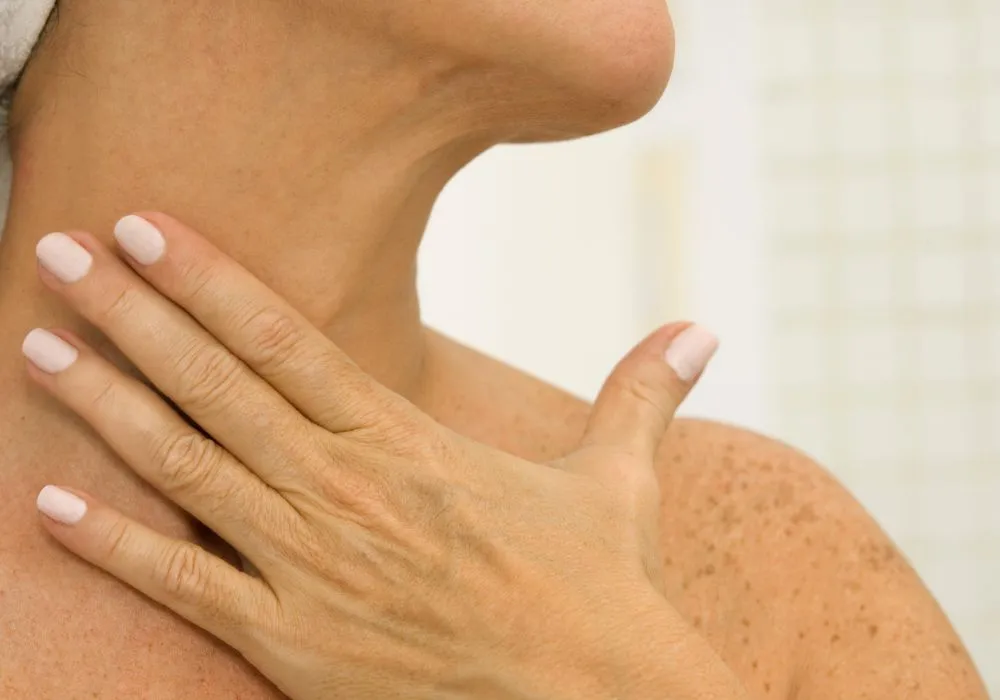
Poikiloderma of Civatte is a chronic, benign pattern on the neck and upper chest, redness, brown pigment, and fine vessels woven into a lace-like patch, usually sparing the shaded area under the chin. Years of ultraviolet exposure are the main culprit; hormones and perfume applied to the neck can make it worse. It is not dangerous, but the visible change bothers many patients. At Revival Medical Aesthetics in Rivonia, doctor-led light, laser, and combination care can soften colour and texture while you protect skin for the long term.
Struggling with crepey neck skin? Watch this!
The neck and décolletage often age faster than the face because they see less daily SPF and more fragrance exposure. In this video, Our clinical team outlines why poikiloderma and crepey skin develop, how sun and perfume interact, and which in-clinic options, from strict photoprotection to IPL and RF microneedling, can improve redness, pigment, and fragile vessels on the chest and sides of the neck.
Revival Solutions Available to You
Revival Recommended Treatments


What Is Poikiloderma of Civatte?
This long-standing dermatosis combines telangiectasia (visible capillaries), mottled brown pigment, background redness, and sometimes slight skin thinning. It classically frames the sides of the neck and V of the chest, leaving the crease beneath the chin relatively clear.
It is cosmetic, not a sign of internal illness, but the contrast against normal skin can feel conspicuous. Cumulative UV is the dominant trigger; shifting hormones and photosensitising fragrances on the neck often play supporting roles.
Who Is Most Affected?
- Most often seen in fair Fitzpatrick I-III skin after decades of outdoor sun.
- Less common in deeper tones (V-VI), though neck and chest photodamage still occurs.
- Frequently reported in peri- and post-menopausal women, pointing to hormonal influence.
- More obvious when fragrance or cosmetics on the lateral neck provoke photosensitivity.
How It Looks and Feels
- Symmetrical, reticulated reddish-brown patches on sun-exposed neck and chest.
- Fine telangiectasia visible within the affected zones.
- Mild epidermal thinning or crepey texture from chronic photoageing.
- Often asymptomatic; some patients notice warmth, stinging, or flushing.
What Causes It?
Ultraviolet Exposure
- Chronic UV dilates superficial vessels, disrupts pigment, and thins the epidermis over time.
- Visible light can add to uneven melanin distribution on exposed skin.
Learn more: Why the sun is stronger in South Africa.
Hormones
- Peak incidence around menopause suggests falling oestrogen may heighten vascular and pigment changes.
Fragrance and Topicals on the Neck
- Perfume and certain cosmetics can photosensitise neck skin when combined with UV.
- Fragrance allergy appears more often in patients with poikiloderma, avoid spraying scent on the neck.
What Pathology Shows
Biopsy is rarely needed for typical cases, but histology may reveal:
- Thinned epidermis with mild atrophy.
- Irregular melanin and pigment incontinence into the dermis.
- Dilated superficial vessels and low-grade inflammation.
- Solar elastosis, damaged elastic fibres from long-term UV.
Treatment at Revival
In-Clinic Options
We start with a doctor-led consultation, mapping your vessels, pigment, and skin thickness, because poikiloderma rarely responds to a single modality. Combination plans pair light and laser work with medical skincare for steadier, safer improvement than treating redness alone or brown alone.
Protocols we commonly layer include:
- IPL: Limelight™ and Photo Genesis™ address both erythema and melanin on the neck and chest.
- Fractional resurfacing: CO₂ laser, Pearl Fusion™, and Endymed FSR rebuild collagen and refine crepey texture.
- RF microneedling: Endymed Intensif™ and Secret™ RF deliver energy along the needle track to remodel skin and reduce fine vessels.
- PRF (platelet-rich fibrin): Supports healing and collagen renewal between energy-based sessions.
Maintenance sunscreen and pigment-safe home care between visits help results last.
Home Care Between Visits
Topicals will not replace devices, but they protect your investment:
- Daily SPF 50+ with broad UVA and visible-light coverage on neck and chest.
- Retinoids, when tolerated, to normalise turnover and support collagen.
- Pigment modulators (e.g. azelaic acid or non-hydroquinone brighteners) for brown components.
- Barrier-repair moisturisers to calm sensitivity and reduce flare-ups.
Living Well With Poikiloderma
The condition is chronic, yet noticeable improvement is realistic. Ongoing photoprotection, fragrance-free neck care, and periodic in-clinic tune-ups at our Rivonia practice can keep redness and pigment under control for years.
Frequently Asked Questions
Poikiloderma consultations and treatments are offered at our Rivonia, Sandton practice on the second floor of the Health and Wellness Center, 353 Rivonia Boulevard. Contact us to book an assessment with one of our doctors.
No, it is benign and does not spread internally or turn into skin cancer. The main impact is cosmetic: visible redness, pigment, and vessels on the neck and chest.
There is no permanent cure because UV and ageing continue, but regular treatment and strict sun protection can markedly fade the pattern and keep it controlled for long periods.
Absolutely. Daily SPF 50+ on the neck and décolletage slows progression, reduces relapse after IPL or laser, and is as important as any in-clinic session.
Download Brochure