



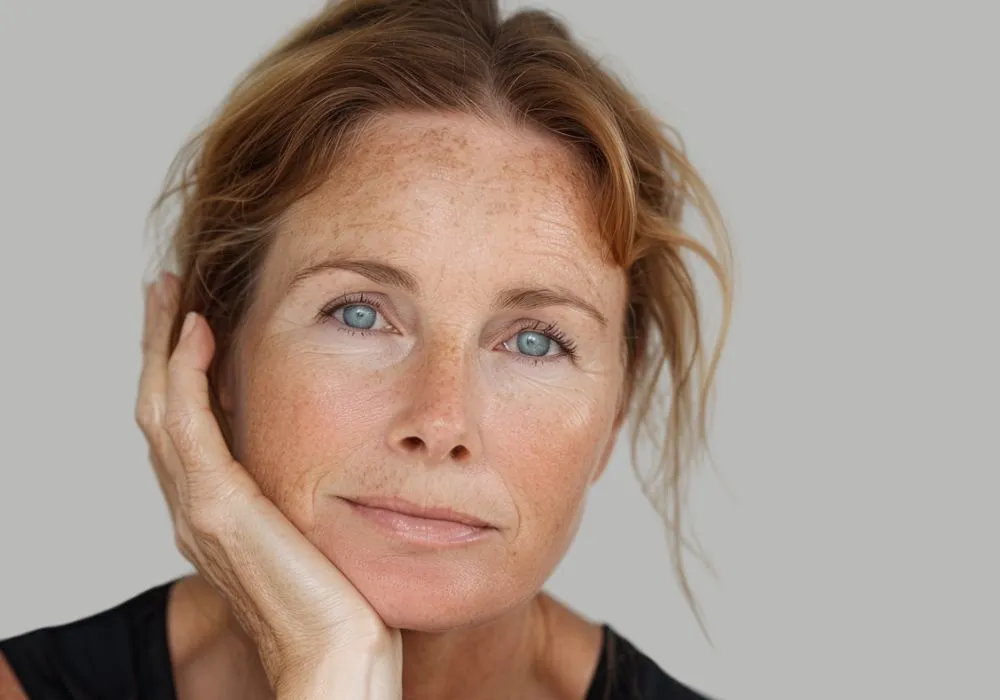
Solar lentigines, often called age spots, liver spots, or sun spots, are flat brown patches that build up after years of ultraviolet exposure. They usually show up where daylight hits most: the face, backs of the hands, forearms, shoulders, and chest. Daily broad-spectrum sunscreen and sensible cover-up help limit new spots; if marks are already present, doctor-led options at Revival, including KTP laser, chemical peels, Limelight™, and Acutip™, can soften pigmentation and refresh skin tone without a one-size-fits-all approach.
Revival Solutions Available to You
Revival Recommended Treatments


What Are Age Spots?
These harmless flat lesions are clusters of extra melanin in the upper skin layers, not a sign of liver disease despite the old name “liver spots.” They reflect cumulative sun damage rather than a single bad burn, though genetics can make some people more prone. Typical locations include the face, hands, arms, shoulders, and décolletage.
What Causes Age Spots?
Ultraviolet light is the main driver: it speeds up photoageing and encourages pigment-producing cells to deposit melanin in localised patches. Family history matters, but lifestyle and climate often tip the balance, in South Africa’s strong UV, early signs can appear in your twenties if protection is inconsistent. Spots tend to become more numerous from the mid-thirties onward as decades of exposure add up.
How to Help Prevent Age Spots
You cannot undo past sun, but you can slow new spots and keep existing ones from deepening:
- Daily sunscreen: Broad-spectrum SPF 50+, reapplied when outdoors for extended periods.
- Midday caution: Seek shade between roughly 10:00 and 16:00 when UV peaks.
- Physical cover: Wide-brim hats, sleeves, and UV-rated sunglasses on exposed skin.
Darker Skin Types: Extra Care
Fitzpatrick IV-VI skin still develops lentigines, but it is also more vulnerable to post-inflammatory hyperpigmentation and uneven tone, especially after inflammation, hormones, or procedures. Consistent sun protection is non-negotiable: melanin offers partial shielding, not immunity from UV-driven darkening.
Freckles, Sun Spots, or Age Spots?
Correct identification guides safe treatment:
- Freckles: Small, light-brown macules, often genetic; they may lighten in winter and darken with sun.
- Sun spots: Flat brown patches tied to chronic exposure; common on hands and face.
- Age spots (solar lentigines): Larger, well-defined brown or grey-brown marks that persist year-round on sun-exposed sites.
Treatment Options for Age Spots at Revival
Your doctor will match therapy to your Fitzpatrick type, spot depth, and skin barrier health. Common in-clinic pathways include:
| Treatment Option | Description |
|---|---|
| Pico KTP | Picosecond laser suited to lighter Fitzpatrick types (I-III); settings are tailored for pigment clearance with controlled downtime. |
| Pico Fractional & Pico Fractional Intense | Fractional picosecond modes that treat pigment and texture across a range of skin tones when parameters are adjusted carefully. |
| Limelight™ IPL / Acutip™ | Intense pulsed light and spot-treatment handpieces that lift superficial brown pigment and even out sun-damaged tone. |
| Laser Genesis™ | Non-ablative laser that supports collagen, refines texture, and can soften diffuse pigmentation over a series of sessions. |
| Fractional Skin Resurfacing | Endymed FSR, Pearl™ Fractional, and CO₂ fractional options remove damaged surface layers and stimulate renewal for stubborn lentigines. |
| Chemical Peels | Medical-grade acids accelerate cell turnover, fading superficial spots and brightening dull photoaged skin. |
| Transdermal Mesotherapy | Targeted delivery of brightening actives into pigmented areas to support in-clinic light and laser work. |
| R.Pen Skin Needling | Certified microneedling with precision depth control and multi-spectrum LED support to enhance penetration and healing. |
| RF Needling (Endymed Intensif / Secret RF) | Radiofrequency microneedling addresses pigment alongside texture and mild laxity in a single modality. |
| Photodynamic Therapy (PDT) | Light-activated protocol, often combined with pigment-focused topicals, for selected lentigines and photo damage. |
| Laser Vein Removal | Treats fine telangiectasia (“broken capillaries”) that often accompany sun damage for a clearer overall appearance. |
Frequently Asked Questions
Age spot consultations and treatments are offered at our Rivonia, Sandton practice on the second floor of the Health and Wellness Center, 353 Rivonia Boulevard. Contact us to book an assessment with one of our doctors.
They form when years of UV exposure push melanocytes to deposit extra pigment in the epidermis. The patches often become more obvious after 40, though heavy sun in youth can start the process earlier.
True solar lentigines are benign and cosmetic. Any lesion that changes shape, bleeds, itches, or develops uneven colour should be examined promptly, those features can signal melanoma or other skin cancers rather than a simple sun spot.
Consistent broad-spectrum SPF, protective clothing, and limiting unprotected midday sun are the foundations. Starting good habits in your twenties and thirties pays off later, when cumulative damage would otherwise surface as new lentigines.
Fair Fitzpatrick I-III skin often shows lentigines earlier because UV damage is less masked by melanin. Deeper skin tones develop them too, and may also struggle with PIH and uneven tone, so daily sunscreen remains essential for everyone.
Stress does not create lentigines on its own, but raised cortisol can impair barrier repair and worsen inflammation-related pigmentation. Managing stress supports overall skin health alongside sun protection.
Timing depends on the modality and your skin type. IPL and peels may lighten superficial spots within a few weeks; lasers, microneedling, and combination plans often need a series spaced weeks apart for durable improvement.
Download Brochure